Why storage and units work on farms
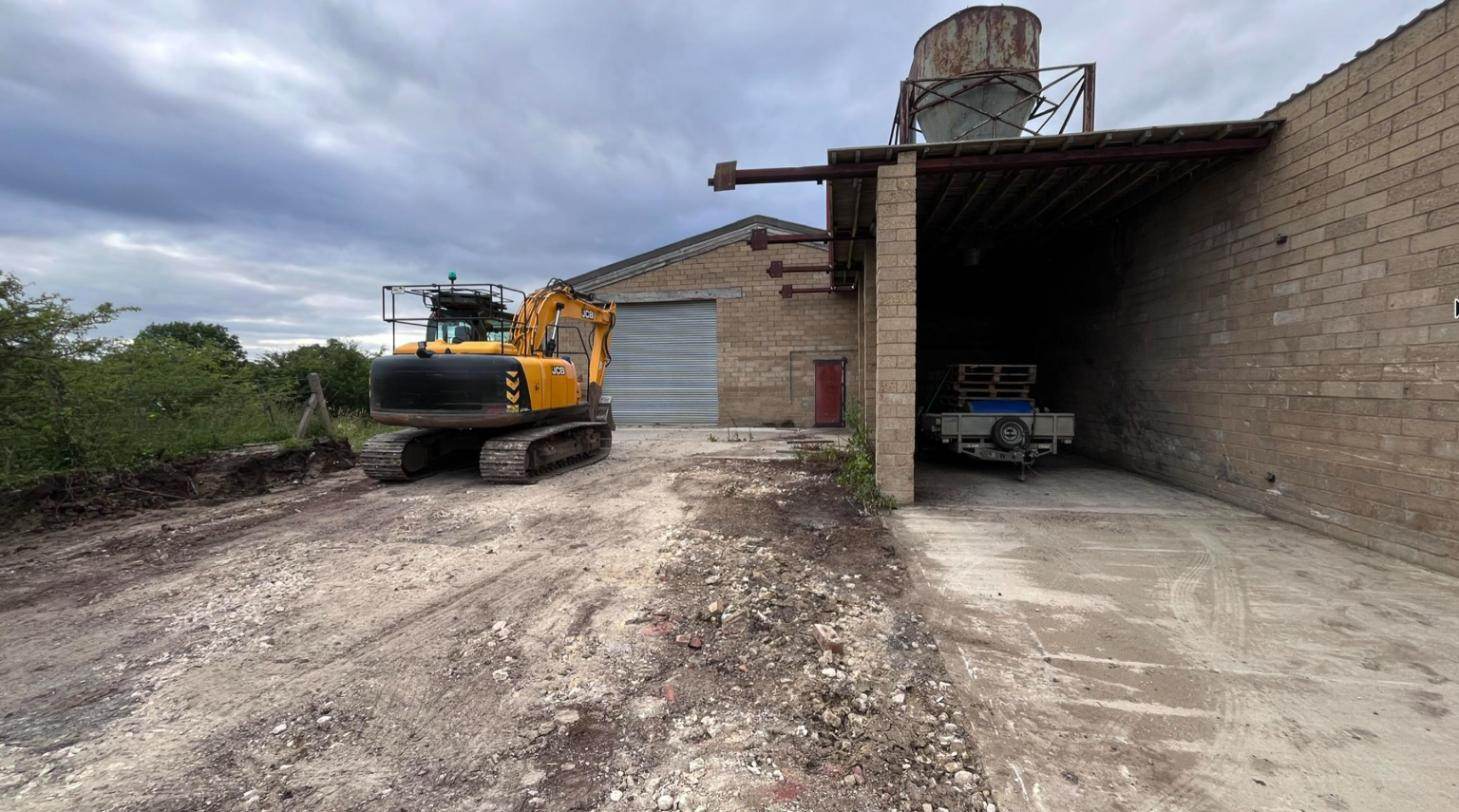
Redundant livestock sheds, grain stores and concrete yards are often already close to what storage and trade tenants need: hardstanding, vehicle access and space. Demand from builders, landscapers, plant hire, online sellers and households is steady across rural Lincolnshire, Rutland and Leicestershire, and much of it can't be met in town.
What converts well
- Steel-framed sheds: clad, divided with blockwork and fitted with roller shutters to make workshop units.
- Concrete yards: fenced into gated yard plots with little more than palisade fencing and gates.
- Field corners near a road: surfaced for container storage, subject to planning.
- Old brick barns: better suited to offices or studios than heavy trades.
Planning routes
Agricultural buildings may qualify for Class R prior approval to a flexible commercial use including storage, now up to 1,000 square metres following the May 2024 changes. Open yards and new hardstanding usually need a full planning application. See our planning guide for the detail.
Our own example
We took a disused railway-side sawmill with open-fronted sheds through change-of-use planning, re-clad the sheds, split them with blockwork and fitted roller shutters and sub-meters. It is now ten let workshop units. Read the Sawmill Business Park case study.
Doing it without the day-to-day
The barrier for most farms isn't demand, it's time: tenants, rent, repairs, compliance and neighbours. That's what our site management takes on, with an owner portal so you can see everything without being involved in it.